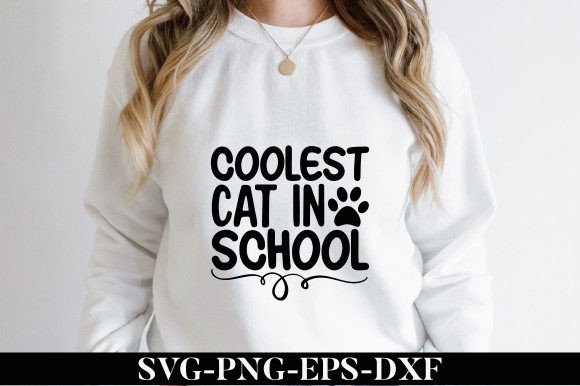
The ‘Coolest Cat in School’: A Designer’s Review for Real Projects
First Impressions: Personality and Potential
When you open the Coolest Cat in School SVG file, the immediate vibe is playful and confident. It’s not a generic cartoon; the styling has a distinct, slightly retro charm that feels both cool and friendly. The layout is clear and balanced, with details like the glasses and the little tie that are charming without being overly intricate. This isn’t a design that shouts; it has a quiet, clever confidence. For embroidery, that’s a fantastic starting point. It promises a handmade product that will look polished and intentional, whether it’s on a child’s backpack or a boutique kitchen towel.
The Perfect Project Match: Where This Design Thrives
In my studio, I immediately picture this on a mid-weight cotton tote bag for a teacher’s gift. The bold, clean shapes would translate beautifully into satin stitch outlines and fill stitch areas, creating a graphic that’s both durable and visually appealing. It’s also a natural fit for a youth-sized sweatshirt or a custom apparel item like an apron for a craft-loving cat owner. The theme lends itself perfectly to personalized gifts—think a baby’s embroidered blanket with their name added beneath the cat, or a set of embroidered patches for a school club.
For small business merchandise, this design has strong giftability. It could anchor a line of nursery decor items or become a staple in an Etsy seller’s catalog of teacher appreciation products. Because the design is a graphic and not a photographic illustration, it maintains excellent stitching clarity and looks professional when rendered in thread, which directly boosts customer trust and the perceived value of the finished product.
Thinking Like a Customer: Visual Appeal in Stitched Form
How will this look after stitching? The clean lines mean it won’t get muddy on fabric. On a light-colored tote bag, using a contrasting thread like navy or charcoal for the cat outline, with a pop of color for the glasses, would make it really engaging. On a dark fabric, you’d need to plan your thread colors carefully—a white or light gray fill stitch for the cat’s face would be essential to maintain the design’s cheerful mood. The relatively open areas mean stitch density can be managed well, avoiding overly thick, stiff patches that can be uncomfortable on wearables like caps.
Practical Considerations: Where to Use Caution
While versatile, the Coolest Cat in School SVG has details that require a thoughtful approach. The glasses and the small tie are the key elements. On very small hoop sizes or on curved surfaces like caps, these finer details could become lost or challenging to stitch crisply. I’d recommend a minimum 4x4 hoop for a standalone embroidery of this design to preserve its character.
Textured fabrics like some towels or nappy blankets might obscure the clean edges. And on thin or stretchy fabric without proper stabilizer, the fill stitches could cause puckering. This isn’t a design for tiny, delicate lettering within it—it’s a graphic statement. So, if you’re adding text, keep it simple and separate.
A Real Scenario: From Digital File to Boutique Product
Let’s walk through a real case. I’m preparing a limited-run set of embroidered pillow covers for a small shop focusing on school-themed gifts. Using this machine embroidery design, I’ll test it first on a scrap of the linen-cotton blend I plan to use. My primary check is the glasses: do the lenses stitch out as clear shapes, or do they blend into the face? I’ll experiment with two thread colors—one for the frame, a slightly lighter one for the lens fill—to keep that detail sharp.
After testing, I’ll run a sample on a finished pillow cover. The result should be a clean, whimsical accent that elevates a simple home decor item into a handmade product with a story. This directly impacts buyer engagement—a customer sees the clever design and connects it with a memory or a person, making it more than just a pillow.
Designer Notes for a Smooth Project
- Always test the design on scrap fabric first. This is non-negotiable. It reveals how your specific machine, thread, and material interact with the file.
- Check thread color contrast in both black and white mockups. How will it look on light and dark backgrounds?
- Review the provided file formats. The listing includes SVG, DXF, PNG, and EPS. For embroidery, you’ll likely convert or use the vector files as a basis for your embroidery file. Confirm your software compatibility.
- Inspect the small details in your software’s preview. Zoom in on the glasses and tie area to ensure they are distinct paths.
- Use proper stabilizer for your chosen fabric. A crisp design like this deserves a stable foundation.
- Most critically, confirm licensing before selling finished items. The product is a graphics file. Does the license permit use on physical commercial embroidery projects for sale? Always verify this to protect your craft business.
Final Judgment: A Versatile Asset for Creative Entrepreneurs
The Coolest Cat in School SVG is a robust design asset. Its strength is in its clear personality and adaptable form. It won’t fight with you during the embroidery process if you approach it with practical preparation. It enhances brand consistency for a maker focused on school, teacher, or youth-themed products. And as a personalized gift or small shop product, it carries a warmth that mass-produced items lack.
For embroidery designers and makers, the value lies in its translation from screen to stitch. It’s a design that, when executed well, looks intentional and professional—the exact quality that turns a simple embroidery project into a cherished finished product. Keep the hoop size reasonable, mind the small accents, and choose your fabrics wisely, and this cool cat will be a standout in your collection.