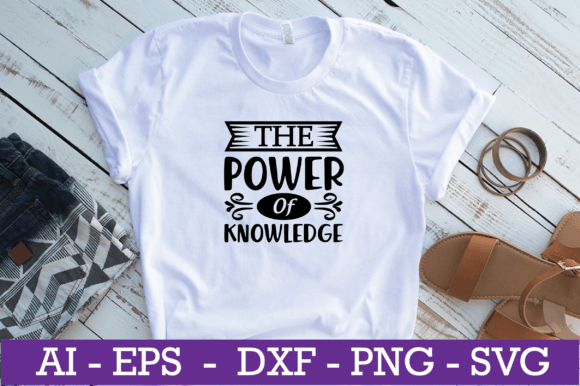
A Designer's Take: The Power of Knowledge Teacher Embroidery
When a new design file lands in my studio, my first instinct isn't to just open it. It’s to imagine it stitched out. I picture it on fabric, under a hoop, with thread. Today, I'm looking at The Power of Knowledge Teacher SVG, and my mind immediately jumps to a custom tote bag—something sturdy, practical, and destined for a teacher’s hands. That’s the real test: does this design translate from a clean vector graphic to a tangible, thread-based product with presence and appeal?
First Impression: A Design Built for Meaning
The title alone, The Power of Knowledge, sets a tone. This isn't just a decorative motif; it’s a statement. The layout and theme suggest a design with weight—both visual and emotional. It feels like it belongs on items meant to be used, seen, and appreciated over time. For embroidery, that means it needs clarity and durability. The shapes and any included lettering need to stitch out cleanly, without tiny details that might get lost in a satin stitch or become fuzzy on textured fabric. This design naturally calls for projects that celebrate mentorship and learning: teacher appreciation gifts, boutique products for educator-themed shops, personalized baby items for a teacher’s new nursery, or custom apparel for the school staff.
Where This Design Shines in Real Projects
In practical embroidery situations, The Power of Knowledge Teacher SVG has a lot of potential. Its strength lies in its likely adaptability. On a dense cotton sweatshirt or a canvas tote bag, with proper stabilizer, this design could become a beautiful, bold focal point. Imagine it on the front of a cozy blanket for a retiring teacher, or as a decorative accent on a kitchen towel for a classroom volunteer. For small business owners and Etsy sellers, this file is a ready-made asset for creating holiday gifts, boutique merchandise, or personalized products that resonate with a specific, appreciative audience.
The inclusion of both AI and SVG files is a practical boon. It means I can easily scale the design for different hoop sizes without losing quality, crucial for creating a cohesive product line—perhaps a smaller version for a cap or baby bib, and a larger, more detailed version for a pillow cover or apron. For commercial embroidery projects, like a batch of patches for a school event, this scalability is key for efficiency and consistency.
A Natural Fit for Handmade Value & Customer Trust
When a customer sees an embroidered item featuring this theme, the connection is instant. It speaks directly to a profession and a passion. That inherent recognition adds value to the finished product. For a crafter or small shop owner, using a clear, well-constructed design like this enhances the overall professionalism of the handmade presentation. It suggests thoughtfulness and quality, which builds customer trust and engagement. A gift embroidered with The Power of Knowledge Teacher SVG feels considered and personal, far beyond a generic store-bought item.
Considerations for Stitching Success
No design is universally perfect for every substrate, and that’s where a designer’s experience comes in. With a theme-driven design like this, there are areas to approach with a careful eye.
- Small Details & Text: If the design incorporates fine lettering for “The Power of Knowledge,” test it on scrap fabric first. Tiny serifs or thin lines can fill in with stitch density, becoming blurred. A slightly larger hoop size might be necessary for optimal clarity.
- Fabric Choice: On highly textured fabrics like some sweaters, or on stretchy fabrics like t-shirts, intricate elements might distort. A good stabilizer is non-negotiable. For dark fabric backgrounds, thread color contrast is paramount—you want the message to pop, not recede.
- Curved Surfaces & Dense Areas: Applying this to a curved surface like a cap requires checking the design’s aspect ratio and potential for distortion at the seams. Also, if any section of the design is very dense with fill stitches, it could become overly stiff on lightweight fabrics like baby clothes.
Products destined for frequent washing, like tea towels or everyday apparel, need a robust stitch structure. Testing the embroidery file on a similar scrap fabric and putting it through a gentle wash cycle can reveal any weaknesses in thread anchoring or design integrity.
Practical Notes Before You Hoop the Fabric
My process before committing any design to a final project involves a few key steps, and I'd recommend the same for The Power of Knowledge Teacher SVG.
- Scrap Fabric Test: Always. Stitch it out on a light and a dark scrap of your intended fabric type. This reveals everything: stitch density, thread coverage, and how small details translate.
- Mockup Review: Use the vector files to create black and white and color mockups. Seeing it in a simple, flat format helps visualize it on different products without stitching every variation.
- Hoop Size & Scale: Determine the minimum and maximum sizes that look good. A design might be beautiful at 4x4 inches but lose definition at 2x2 inches.
- Commercial Use Check: This is critical. The product description lists the file formats but doesn’t explicitly state the license. Before selling finished items or using this in commercial embroidery projects, you must confirm the licensing terms. Never assume.
The Final Stitch: A Design with Purpose
Evaluating The Power of Knowledge Teacher SVG from a maker’s perspective, it stands out as a graphics file with clear application and emotional resonance. It’s not a frivolous decoration; it’s a design meant to adorn products with a story. Its success in your craft business or personal projects will hinge on those practical embroidery choices: the right fabric, the thoughtful scale, the appropriate stabilizer, and a thorough test stitch. When executed well, it becomes more than a pattern—it becomes a tribute, stitched in thread, that any teacher would recognize and cherish. That’s the real power of a good embroidery design: it carries the meaning right through the needle and into the finished product.