A Designer's Review of the 100 Days of Virtual School SVG
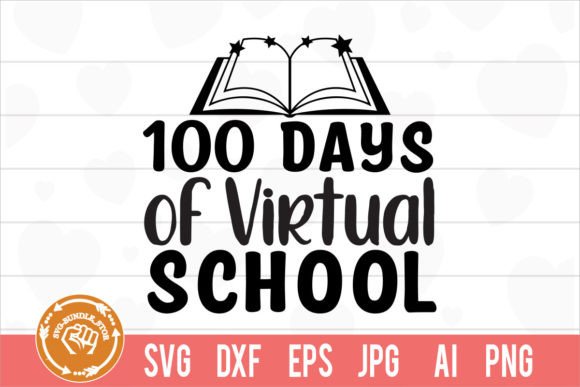
From my perspective, reviewing an embroidery file isn't about ticking boxes on a spec sheet. It’s about imagining how it will feel when the needle starts moving, how the thread will lay on the fabric, and what kind of story the finished piece will tell. Today, I'm looking at the 100 Days of Virtual School SVG Cut File, considering its potential for real projects—from a custom gift for a teacher to a standout product in a small shop.
The Immediate Impression: Celebration and Recognition
The first thing I notice is the mood. It’s celebratory, a mark of endurance and adaptation. The layout, with its layered text, suggests a clean, modern aesthetic that translates well into stitchwork. The theme is specific—it speaks directly to a shared experience. This isn’t a generic graphic; it has personality. For an embroidery designer, that specificity is gold. It tells me this design belongs on items meant as keepsakes or tokens of appreciation: a commemorative pillow for a student’s room, a custom tote bag for a homeschooling parent, or an embroidered patch on a graduate’s hoodie.
Where This Design Shines in Real Embroidery Projects
Let’s walk through a real scenario. Imagine a client requests a personalized gift for a teacher who just wrapped up a full virtual semester. You’re thinking of a premium cotton tea towel or a cozy sweatshirt. The 100 Days of Virtual School SVG fits perfectly. The clean lines and text-based design mean it will embroider with excellent clarity on these common substrates. Satin stitches for the bold lettering will look polished, and the overall composition will feel balanced on the chest of a sweatshirt or centered on a towel.
For small business owners and Etsy sellers, this design has strong potential as a ready-to-list product. An embroidered baby onesie with this design could be a witty gift for parents who navigated virtual learning with a little one. Stitched onto a durable canvas apron, it becomes a fun, conversational piece for the kitchen. As a digital embroidery file, it’s a solid asset for a crafter building a library of topical designs for holiday gifts or boutique merchandise. The commercial embroidery potential is clear—it could be scaled for a batch of caps or a series of pillow covers for a local gift shop.
Visual Appeal and Professional Execution
When a design stitches out cleanly, it directly impacts customer trust and the perceived value of your handmade product. This design’s structure should lend itself to good stitch clarity, avoiding overly dense fill areas that can pucker fabric. A crisp execution on, say, a tote bag design elevates it from a simple craft to a professional-looking accessory. The recognisable theme enhances its giftability—it feels thoughtful and relevant. For creative entrepreneurs, using such a well-defined design consistently across products (like on both a patch and an apparel item) can subtly reinforce brand consistency in your craft business.
Points for Careful Consideration Before Hooping Up
No design is universally perfect for every application, and a practical review must highlight where to proceed with caution. Given the likely presence of text and layered elements, I would be mindful on several fronts.
- Small Hoop Sizes: If you plan to miniaturize this for a tiny patch or a baby item detail, test thoroughly. Small lettering and intricate corners need careful stitch settings to remain legible.
- Textured or Stretch Fabrics: On a slub knit or a stretchy polo shirt, the design’s stability depends heavily on your stabilizer choice. A less-than-ideal foundation could blur those clean lines.
- Dark Fabric Backgrounds: The design’s impact relies on contrast. On dark fabrics, your thread color selection becomes critical to maintain visual pop and stitching clarity.
- Curved Surfaces: Embroidering this on a cap’s curved panel requires attention to digitizing for distortion compensation—check how the SVG file adapts.
- Products for Frequent Washing: If stitching onto a kitchen towel or everyday apron, consider stitch density. Too dense, and it may wear differently; too light, and it may not endure.
Practical Notes from the Embroidery Machine Side
Before committing this to a client’s project or your own product line, here’s my standard workflow advice.
- Test on Scrap First: Always run the embroidery file on a scrap of your intended fabric. This reveals everything: stitch density issues, small detail integrity, and overall scale.
- Check Contrast in Black & White: Create a simple black and white mockup. Does the design hold its form without color? This helps assess its fundamental strength.
- Review for Both Backgrounds: Stitch a sample on a light fabric and a dark fabric scrap (or simulate it digitally). This previews how thread color choices will affect the final look.
- Confirm the Practical Details: The product description notes it includes an AI file and an SVG file. As an embroidery designer, you’ll need to convert or use these within your digitizing software. Ensure the file works cleanly in your workflow. Importantly, verify the licensing terms. Can you use this for commercial embroidery projects and sell the finished products? That’s a must-check for any small shop product or Etsy listing.
- Consider the Whole Presentation: For digital product sellers, this SVG file could be part of a printable mockup for a baby blanket or a sweatshirt. How does it look in that preview? Does it convey the quality a buyer would expect?
The Final Stitch: A Design with Purpose
In my judgment, the 100 Days of Virtual School SVG Cut File is more than a graphic; it’s a design with a clear purpose. It captures a moment and translates it into an embroiderable asset with a modern, clean aesthetic. Its best applications are projects where that recognition and celebration are the focus—personalized gifts, commemorative home decor, and topical small business merchandise. Its potential pitfalls are typical of text-based designs and are manageable with standard, careful embroidery practices. For the crafter, maker, or entrepreneur looking for a design that tells a specific story with professional stitching potential, this file warrants a close look. Just remember to do your homework on the machine embroidery side—test, check, and confirm—so your finished product reflects the quality your customers, or that special gift recipient, deserve.